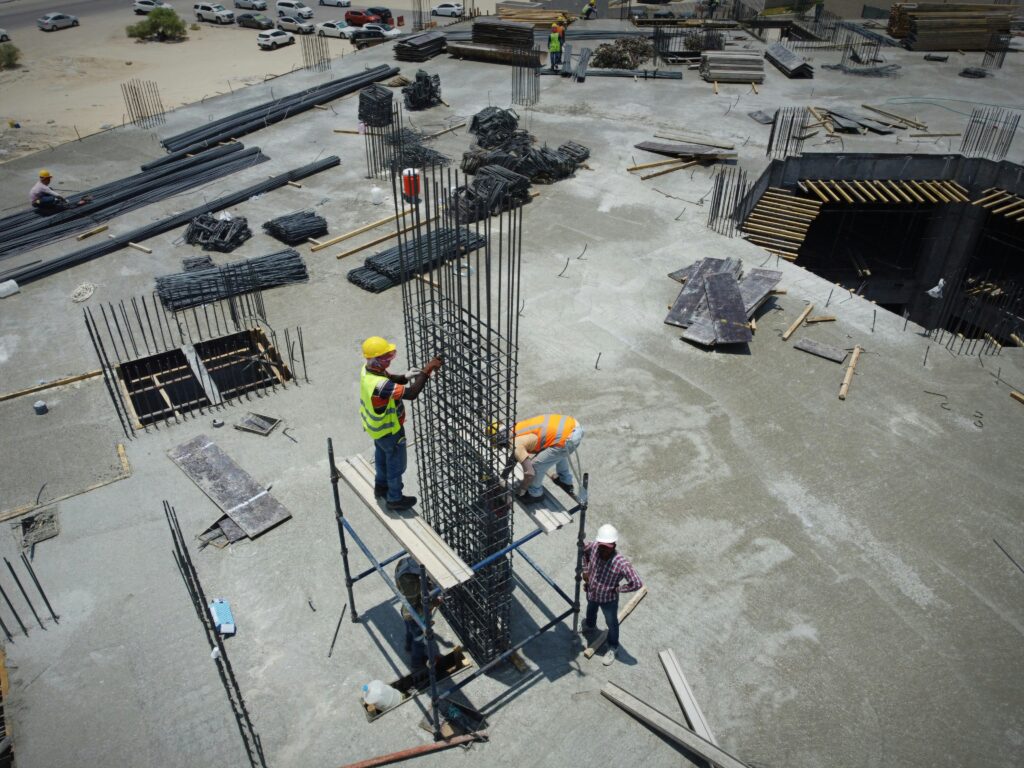



Choosing a construction company in Jeddah is an important decision for business owners, developers, and project managers. Our choice can affect quality, costs, timelines, and long-term performance. At Albnayat Al Arabia, we believe good decisions start with clear requirements and careful checks.
Whether we are planning infrastructure, a pump station, a water tank, electrical works, a SCADA system, roads, or land development, we should look beyond the lowest quotation. We need a contractor whose experience and approach fit our project.
1. Match Experience to Your Project
Experience in one construction area does not automatically prove expertise in another. We should check whether the contractor has handled projects with similar technical requirements, site conditions, and scale. Ask for examples that match the work we are planning.
Pump stations and water tanks require coordinated construction and technical work. Roads and land development have different site needs, while electrical works and SCADA require specialist expertise. Ask who will carry out each part.
2. Review Projects and Verify Claims
A project gallery is useful, but photographs alone do not prove the full scope or quality of delivery. Ask what role the contractor performed, which work packages it handled, and whether the examples are comparable to our project.
Where possible, request client references or project details that can be checked. We should also confirm that any licences, registrations, and specialist qualifications required for the work are valid and applicable. A contractor should explain its experience clearly.
3. Compare Quotations, Not Just Prices
Compare quotations only after checking that they cover the same scope. One may include materials, testing, installation, and handover documents, while another excludes them. A lower price may not represent better value if important work is missing.
Before construction company in Jeddah choosing, we should clarify:
What work and materials are included or excluded?
Which drawings and specifications apply?
What payment milestones are proposed?
How will changes and additional work be priced and approved?
Are testing, commissioning, and handover documents included where required?
Clear quotations make costs easier to understand and reduce avoidable disagreements.
4. Ask How Quality Will Be Managed
Quality should be checked throughout construction. Ask how the contractor manages material approvals, inspections, testing, workmanship, and defect correction, in line with project specifications and applicable requirements.
For tanks, pump stations, roads, infrastructure, and electrical systems, the necessary checks will differ. We should ask who is responsible for inspections, how results are recorded, and how non-conforming work is handled. For technical decisions, rely on qualified professionals.
5. Understand the Schedule and Project Controls
Delays can affect budgets, other contractors, business operations, and handover dates. Ask for a realistic schedule showing key stages, milestones, dependencies, and client approvals needed. The contractor should explain how progress will be tracked and reported.
Ask how suppliers, subcontractors, delays, and scope changes will be managed. No contractor can guarantee a disruption-free project; what matters is planning for risks, clear responsibilities, and documented communication.
6. Check Communication and Responsibilities
Good communication helps us make timely decisions and understand site progress. Before signing, identify the main contact, agree on update frequency, and establish how questions, approvals, and urgent issues will be handled.
Clarify who coordinates work packages and approves changes. This matters when civil works, electrical systems, SCADA, equipment, and other activities must work together. Written updates and meeting notes help reduce misunderstandings.
7. Confirm Approvals, Safety, and Contract Terms
Before work starts, identify applicable permits, approvals, inspections, and technical requirements. Agree on responsibilities and verify Saudi requirements through official channels and qualified consultants.
Read the contract carefully and confirm the scope, specifications, schedule, payment terms, variation process, defect responsibilities, and handover requirements. Ask how site safety is managed and documented. For a significant project, professional legal or technical review can help clarify obligations before we commit.
8. Plan for Testing and Handover
A project is not ready simply because visible construction appears finished. Depending on the scope, handover may require inspections, testing, commissioning, as-built information, or operating instructions. Agree on these deliverables before signing.
This is especially relevant for pump stations, water tanks, electrical works, and SCADA systems, where performance and coordination matter alongside physical construction. Ask how outstanding defects will be recorded and resolved, and what evidence will be provided at handover. Clear expectations help us assess completion fairly.
Conclusion: Choose Evidence, Clarity, and Capability
The truth is that the lowest quotation is not always the safest or most economical choice. We should compare relevant experience, clear scope, quality controls, realistic scheduling, communication, compliance, and the contractor’s ability to manage the work we need. Careful checks before signing can help prevent costly misunderstandings later.
At Albnayat Al Arabia, we understand that every project begins with specific requirements and practical decisions. Whether the work involves infrastructure, pump stations, elevated or ground water tanks, electrical works and SCADA systems, roads, or land development, the first step is to define the scope and ask the right questions. Choosing a team suited to the project helps create a stronger foundation from the start.